Related Links and Other Information Related Links and Other Information
** Links open in New Window **
We Recommend - Signature Federal Credit Union
"FRIEND BANK" WAS DEDUCTING $10 PER MONTH BECAUSE BALANCE WAS LESS THAN $1500
WE MOVED THE ACCOUNT TO  
WE NOW HAVE A NEW CHECKING ACCOUNT
AND 9-Month Certificate of Deposit (Earning 3.981% Interest)
Click on the link to . Check it out and JOIN
Nationwide surcharge*-free access – 37,000+ ATMs & 5,550+ Shared Branch locations
For example,  , ,  & &  in Dothan, in Dothan,
Plus many "free access ATMs" in the local area.
Be sure to let Signature know Marvin Marley is your sponsor.
Note: Marvin does not benefit anything - (unless you qualify on your own, you will need a Sponsor)
Click here to see ALL Signatures Products
|
| NEWTON, ALABAMA--A PICTORIAL HISTORY |
 |
 |
 |
 |
 |
| Clouds/Sky |
John Hutto Park |
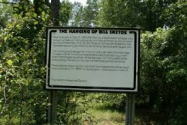
Sketoe Hanging Sign |
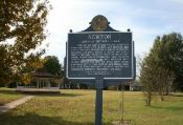
Battle of Newton Sign |
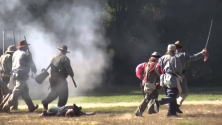
Newton Battle Photo |
 |
 |
 |
 |
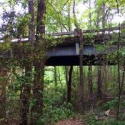
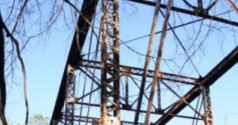
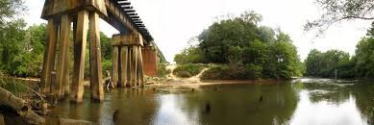
| Old River Bridge |
Old Train Trestle over Choctahattchee River |
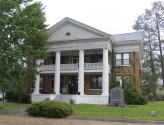
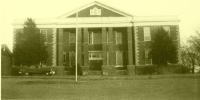
Oates-Reynolds Building |
Old Newton High School |
 |
 |
 |
 |
 |
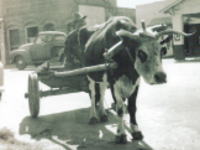
| Quinnie Roberts |
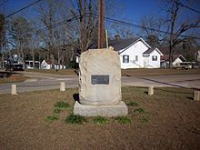
Civil War Monument |
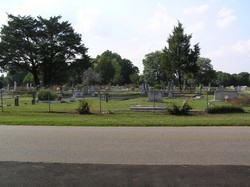
Newton Cemetery |
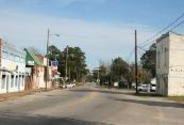
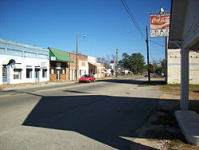
Newton Downtown |
Downtown Newton |
Newton was founded in 1843 after the formation of Coffee County from Dale
County's western half, which rendered the original county seat of Daleville
off-center. The town was a scene for Confederate recruiting during the
Civil War, and was the site of a battle in March 1865 between local Home
Guard troops and the elements of 1st Florida Calvary (US) operating out
of Florida. The Federals were led by Joseph Sanders, a Dale County resident
who had previously been a captain in the 31st Georgia infantry, but had
later switched sides and joined the Federals. Seeking to burn the county
courthouse, the attackers were repulsed when local troops ambushed their
column as they entered the town. This event is commemorated by a monument
located in downtown Newton and by annual re-enactments.
On December 3, 1864, a Methodist minister named Bill Sketoe was lynched
just north of Newton by local Home Guardsmen led by Captain Joseph Brear.
Since Sketoe was tall, a hole had to be dug beneath his feet to accommodate
his large frame. Local legend insists that "the hole won't stay filled"
never vanished - even after being filled in numerous times during the years
that followed. Though covered in 1979 by a new bridge and tons of rip-rap,
"Sketoe's hole" remains a local attraction and was documented
by Alabama writer Kathryn Tucker Windham in her 13 Alabama Ghosts and Jeffery.
A monument to Sketoe was dedicated near the hanging site in 2006, and the
local museum displays items of Sketoe memorabilia.
Following a fire which destroyed the courthouse in March 1869, and the
formation of Geneva County in 1870 from the southern third of Dale and
Coffee Counties, voters relocated the county seat to Ozark, which was more
centralized.

The Southern Star, one of the oldest newspapers in the Wiregrass area, was first published in Newton in 1867. It later relocated to Ozark, where it continues to be published today.
Newton remained a port for river boats on the nearby Choctahattchee, until
the railroad arrived in  1890. 1890.
The Baptist Collegiate Institute operated in the city from 1898 to 1929.
Its main building in Newton (the Oates-Reynolds Building) now houses the
city's public library and Museum. It was reestablished in 1943 in Lakeland,
FL and was known as the Florida Baptist Institute.
It moved to Graceville, FL in 1953 and was named Baptist Bible Institute.
Today it is The Baptist University of Florida.
BUF is located on a rural campus in Graceville, Florida. The campus includes
the R.G. Lee Chapel, a library, dining facilities, several dormitories,
a gymnasium, a weight room, a student center, and multiple classroom and
administrative buildings.
|
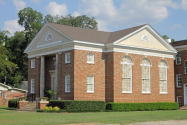
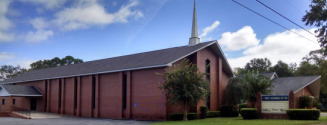
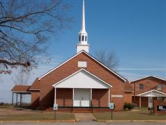
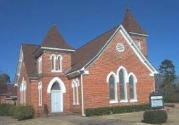
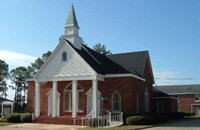
| Churches in the Newton Area |
 |
 |
 |
 |
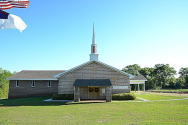
| First Baptist |
First Assembly of God |
Bethel Baptist |
First United Methodist |
 |
 |
 |
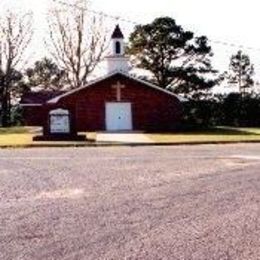 |
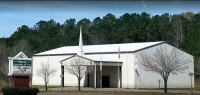
| Pilgrim Home Baptist |
Piney Grove Assembly of God |
Pinckard Baptist |
Mount Hebron Methodist |
|
 |
|
 |
|
Midway Assembly of God |
|
Pinckard United Methodist |
|